“coffee tree growing conditions” search results (1000)

How much coffee does the coffee tree produce in a year?
At present, the most important coffee beans in the world come from Arabica, Robasta and Liberia. these three varieties of coffee beans are the three original species of coffee trees, and the quality of coffee beans produced by other coffee trees is also higher than that of other coffee trees. Arabica Coffee Tree, which originated in Ethiopia, accounts for 70% of the world's coffee production, and is a world-famous coffee product.
2016-06-04 Coffee year how much coffee type currently the world the most important coffee beans
Basic knowledge of Fine Coffee planting of Coffee trees
Coffee is now widely grown in the ribbon between the Tropic of Cancer. Coffee grown in different regions has different tastes. The unique soil, climatic conditions and planting methods of a country make the coffee produced in that country have a unique flavor. French winemakers call this phenomenon regional style. Geographically, there are three global coffee growing areas.
2014-12-15 Boutique coffee basics common sense planting now Tropic of Cancer occasional ribbon ground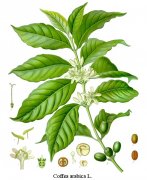
Coffee cultivation techniques detailed explanation of planting knowledge of Coffee trees
Coffee, cocoa and tea are called the three major beverages in the world, and their output, consumption and output value all rank first. In addition to being used as a beverage, coffee can also extract caffeine and coffee oil; in medicine, it can be used as an anesthetic, stimulant and diuretic cardiotonic agent. Coffee pulp can be used to make wine, vinegar, pectin and molasses; dried pulp can be used as animal feed; dried fruit shell can be used as fertilizer and burning
2015-02-16 Coffee cultivation techniques planting knowledge detailed explanation
Introduction of cultivation and species of Coffee Tree
Cultivation techniques require that the origin of coffee trees [4] is in Ethiopia in Africa. In botany, coffee trees belong to the evergreen trees of the subgenus Rubiaceae, and coffee beans, commonly known as coffee beans, are actually the seeds of the fruit of coffee trees. They are called coffee beans only because they are shaped like beans. Climate is the decisive factor for coffee cultivation, and coffee trees are only suitable for growing in the tropics or subheat.
2016-06-13 Coffee cultivation introduction species cultivation techniques requirements Origin Africa
Introduction to the growth environment of Jamaican coffee producing area, which is one of the most favorable coffee growing conditions.
In 1981, about 1500 hectares of land in Jamaica was reclaimed for coffee cultivation, followed by investment in another 6000 hectares of coffee land. In fact, today's Blue Mountain area is a small area with a planting area of only 6000 hectares, and not all coffee marked with the words Blue Mountain can be grown there. Another 12000 hectares of land is used to grow the other two types of coffee (non-
2016-06-28 Planting conditions superior coffee one Jamaica producing area growth environment introduction
Barista course
Climate is the decisive factor for coffee cultivation. Coffee trees are only suitable for growing in the tropics or subtropics, so the zone between latitude 25 degrees south and north is generally called
2014-07-16 Coffee knowledge barista coffee training
Growing Coffee trees in Taiwan Coffee Coffee in Taiwan Cafe
Boutique coffee (specialty coffee) is also called specialty coffee selection coffee. It refers to coffee made from a small number of raw beans with excellent taste grown in an ideal geographical environment. Depending on the special soil and climatic conditions in which they grow, they have outstanding flavor. After strict selection and classification, this kind of coffee is hard in texture, rich in taste and stylish.
2016-06-19 Taiwan planting coffee flavor cafe boutique speci
Introduction to fine coffee with moist and smooth taste in Hawaiian Coffee Manor
The excellent quality of Kona coffee benefits from the suitable geographical location and climate. Coffee trees grow on the slopes of volcanoes, and their geographical location ensures the altitude needed for coffee growth; the dark volcanic ash soil provides the necessary minerals for coffee growth; and the climatic conditions are very suitable. The morning sun gently passes through the steamy air, and in the afternoon, the mountains become more and more.
2016-09-08 Taste moist smooth Hawaiian coffee manor producing area flavor characteristics boutique
Basic knowledge of boutique coffee conditions for planting coffee trees
Coffee belt: coffee can not be grown in any environment, because it is originally a plant growing in a tropical rain forest, and in phylogeny, it forms the habit of requiring calm wind, cool, shaded or semi-shaded and humid environment. We call the strips on both sides of the equator between latitudes 25 degrees south and north suitable for the growth of coffee trees as coffee belts. Temperature: the requirement for temperature varies with the species of cultivation, small
2014-12-22 Boutique coffee basics common sense planting conditions is in any environment
What are the cultivation techniques of coffee trees? what is the reason for the astringency of coffee?
It is required that the origin of coffee tree [4] is in Ethiopia in Africa. In botany, coffee trees belong to the evergreen trees of the subgenus Rubiaceae, and coffee beans, commonly known as coffee beans, are actually the seeds of the fruit of coffee trees. They are called coffee beans only because they are shaped like beans. Climate is the decisive factor for coffee cultivation. Coffee trees are only suitable for growing in the tropics or subtropics, so the south
2016-06-08 Coffee what cultivation techniques what is why requirements coffee origin Africa
The establishment of a coffee garden
1. The environmental conditions of land selection, planning and reclamation are closely related to the growth and development of coffee, which should be determined according to the growth habits and environmental requirements of coffee. Try to avoid choosing lowlands where cold air is easy to accumulate and condense frost; coffee roots are good, so choose well-drained and loose soil; coffee needs a calm wind environment, so in areas where there is no primary forest, consideration should be given to planning windbreaks.
2014-06-16 Coffee knowledge coffee garden coffee encyclopedia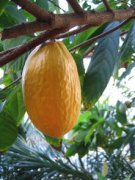
What's the difference between cocoa beans and coffee beans?
Cocoa and coffee are two different plants with different tastes. Chocolate, formerly known as cacao, is a seed taken from the fruit of a cocoa tree, which grows directly from tree trunks and branches, also known as cocoa pods. Mature cocoa fruits, that is, cocoa pods, change in color from turquoise to yellowish brown or reddish brown, with different species of trees
2015-03-04 Coffee common sense cocoa beans coffee beans what the difference but and coffee two no
Planting coffee trees requires the weather, climate and soil quality of the province.
1. Arabica coffee is not resistant to high temperature and humid climate, nor can it stay at a low temperature below 5 ℃ for a long time, so it is mostly planted on steep slopes at elevations of 1000 to 2000 meters above sea level. On the other hand, Robusta caffeine is adaptable (Robusta means tenacious) and is mostly grown in lowlands below 1000 meters above sea level. The average rainfall for the whole year is in
2016-06-01 Planting coffee need province weather climate soil conditions rabbi
Geographical distribution of coffee bean producing areas and planting techniques of coffee trees
Geographical distribution editors the paradise of coffee growth is mostly located in countries with alpine terrain between the Tropic of Cancer. It is native to tropical Africa and is introduced and cultivated in South and Southwest China. [2] the cultivation technology editor requires that the origin of the coffee tree [4] is in Ethiopia in Africa. In botany, the coffee tree belongs to the evergreen tree of the coffee subgenus of Rubiaceae, and the so-called coffee beans are actually
2016-06-07 Coffee beans origin geographical distribution coffee planting technology editing
Introduction to the flavor and taste of Nicaraguan coffee lemon tree manor
The planting conditions in Nicaragua are not inferior to those in Central American countries. Shaded coffee is grown at high altitudes. It tastes round and balanced with less sharp acid. The main unknown factor is war and hurricanes, which make a single farm unsustainable. There is no historical data for raw bean merchants to track and check farm data until after 2003, the bad factors of coffee quality are removed and backward intercourse.
2016-08-03 Nicaragua coffee lemon tree manor producing area flavor taste introduction characteristics
The planting environment of coffee trees introduces which countries are the most suitable for growing coffee
The first flowering period of the coffee tree is about three years old. the white five-petal tube-shaped flowers are filled with a faint scent of jasmine and the inflorescences are arranged in dense clusters. Flowers wither after two or three days of blooming and begin to bear fruit after a few months. The fruit is a drupe with a diameter of about 1.5 cm, which is green at first, then turns yellow gradually, and turns red after ripening, which is very similar to cherries.
2016-07-20 Coffee planting environment introduction which national suitable coffee first time flowering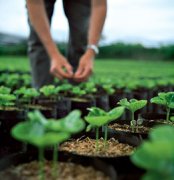
The way coffee is grown. A conscientious coffee tree.
Coffee cultivation is now widely grown in the ribbon between the Tropic of Cancer and the Tropic of Cancer. Coffee grown in different regions has different flavors. The unique soil, climatic conditions and planting methods of a country make the coffee produced in that country have a unique flavor. French winemakers call this phenomenon regional style. Geographically, global coffee
2015-10-07 Coffee planting way due diligence coffee now Tropic of Cancer
Basic knowledge of boutique coffee the growth of coffee trees
The growth and fruit of coffee trees varies with different varieties / environmental conditions. In the high altitude area of Yunnan, the small seed coffee cultivated has the advantages of cold climate, large cloud cover, short light and slow plant growth, but the branches develop into sturdy backbone branches after the first branch bears fruit, and the second / third branch has strong ability to produce. The growth is exuberant and the fruit is dense, which is the main fruiting branch, so it is suitable to adopt single trunk shaping. Two / three
2014-12-19 Boutique coffee basics common sense growth results conditions varieties
Characteristics of Hawaiian Coffee Variety producing area introduction of Fine Coffee Bean Flavor Manor
The real Hawaiian Kona coffee makes people enjoy the unique pleasure and leads you slowly into the detached state of tasting coffee. And this comes entirely from the oldest Arabica coffee tree. Hawaii is the only state in the United States that grows coffee, which is grown on the five major islands of the Hawaiian Islands: Oahu, Hawaii, Maui, Kauai and Moroca.
2016-09-23 Hawaii coffee variety producing area characteristics boutique coffee beans flavor taste Zhuang
Sidamo production area introduced by Coffee Tree Plantation
Variety classification Arabica bean coffee tree can be divided into two main varieties: Arabica species (Coffea Arabica) and Robusta species (Coffea Robusta/Coffea Canephora). There are also some minor species, such as the Liberian species (Coffea Liberica) and the Alabasta species (Coffea Arabusta), but they are rare on the market. Rob.
2016-06-16 Coffee planting Manor introduction West Dharma producing area Variety Classification Rabbi